We are lucky to have Ariel Mortera, PT and
AIMS Physical Therapy join the James Medical Center. Ariel is one of the
best physical therapists that we have worked with and we recommend him
without reservation to our patients in need of physical
therapy. Ariel is always happy to help our patients attain their
treatment goals. His physical therapy treatment regiments help with
stretching, strengthening, decreasing inflammation, improving swelling
and circulation, as well as aiding in balance and gait. We are also
partnering with AIMS to offer our athletes and runners an evaluation of
their running form in Runners Clinic.
You can reach Ariel at 708-397-4010 with questions or to schedule an evaluation. His website is http://www.aimsphysicaltherapy.com/
Monday, July 15, 2013

Tuesday, February 12, 2013
We now offer FDA appoved laser treatment of nail fungus
At Advanced Podiatry Clinics, we are your
west-suburban Chicagoland specialists in the laser treatment of nail
fungus or onychomycosis with the Cutera laser system. We
offer our patients maximally effective results without the risk of liver
damage from months of taking oral antifungal medication Dr. Claude
Harb, is our Cutera laser specialist, with extensive experience in the
treatment of nail fungus. Please contact our office at (708) 450 - 0705
for more information.


1. What is nail fungus or onychomycosis? Nail fungus or onychomycosis is a fungal infection of the nail plate, nail bed, and nail matrix that effects millions of people. The infection is usually caused by Trichophyton rubrum species, which can be seen as septated hyphal elements on a KOH prep, as bellow. Often this fungal nail infection manifests in thickening, discoloration, brittleness, and nail debris. Certain conditions such as chronic fungal skin infections, like Athlete’s foot, or diseases which affect your immune system, such as diabetes, can put you at a higher risk to develop onychomycosis.

KOH wet prep of a fungal nail specimen at Advanced Podiatry Clinics
2. What is the Cutera laser treatment for onychomycosis? This novel treatment of nail fungus, FDA cleared since 04/07/2011, uses a 1064 nm wavelength of laser light to kill onychomycosis causing fungus in the nail plate, nail bed, and nail root. The laser is able to penetrate up to 3 mm in depth to ensure that all fungus and fungal spores are destroyed, without any pain or damage to the human tissues.


3. What other options are available for treatment of nail fungus? Prior to the invention of the laser treatment for nail fungus, the options for the treatment of this stubborn condition were extremely limited. They included the application of topical anti-fungal medication for years with minimal, if any results. The other option included taking an oral anti-fungal medication, such as terbinafine or itraconazole, for an extended period of time with risk of damage to the liver. Furthermore, patients with a history of liver disease or taking certain other oral medications, were not candidates for oral treatment.
4. How effective is the Cutera laser treatment? Studies show an 81% “complete” to “moderate” clearance of resistant onychomycosis with the Cutera Laser, with no side effects*. At Advanced Podiatry Clinics, from our experience the success rate has been even higher. The efficacy is significantly higher than topical or oral medications.
* Kimura U, Takeuchi K, Kinoshita A, Takamori K, Hiruma M, Suga Y. J Drugs Dermatol. 2012 Apr;11(4):496-504.
5. What will my treatment consist of? Your treatment will consist of an initial evaluation by Dr. Igor Dukarevich or Dr. Claude Harb to make sure that you are a candidate for the laser treatment of onychomycosis with the Cutera laser system. Clinical photographs will be taken. We will also confirm the presence of the fungal infection either by a KOH stain directly in our office, or a by a PAS stain and fungal culture performed by Bako Pathology Services. Your nails will be debrided and filed down to the optimal thickness for laser penetration. During your visit, your shoes will be sanitized with an ultraviolet shoe sanitizer. The Cutera laser treatment will be performed by Dr. Claude Harb, our specialist in the Cutera laser nail treatment. For a video of a treatment, please click here. Three treatments have to be performed: the first at the initial visit, the second at 3 weeks, and the third at 3 months, to make sure that all fungal organisms and fungal spores are eradicated. You will also receive a shoe spray and a cream to prevent future reinfection.
6. How soon will I see results? Two to three months after the Cutera laser treatments, you will start to see the new and healthier nail grow from the nail root. For maximum improvement, you will need to wait for the nail to fully grow out, which may take up to 9 to 12 months. A chronic fungal infection often damages that nail root and the nails may grow even slower.


7. What should I do to prevent reinfection? Prevention of reinfection is a major part of your treatment. After your treatment with the Cutera laser, you will need to follow preventative instructions closely.
8. Is this a covered procedure under my health insurance plan?
At this point, most insurance carriers consider onychomycosis to be a cosmetic disorder and strictly limit the coverage of the treatment. Laser treatment of onychomycosis is usually a non-covered service. You should check with your insurance company individually to inquire about your benefits. Often, this service can be covered with a flex spending account. Advanced Podiatry Clinics will provide you with a service receipt after your treatment, which you may submit to your insurance company. Please call our office at (708) 450-0705 for more information on cost of the treatment, coverage, and scheduling.
1. What is nail fungus or onychomycosis? Nail fungus or onychomycosis is a fungal infection of the nail plate, nail bed, and nail matrix that effects millions of people. The infection is usually caused by Trichophyton rubrum species, which can be seen as septated hyphal elements on a KOH prep, as bellow. Often this fungal nail infection manifests in thickening, discoloration, brittleness, and nail debris. Certain conditions such as chronic fungal skin infections, like Athlete’s foot, or diseases which affect your immune system, such as diabetes, can put you at a higher risk to develop onychomycosis.
KOH wet prep of a fungal nail specimen at Advanced Podiatry Clinics
2. What is the Cutera laser treatment for onychomycosis? This novel treatment of nail fungus, FDA cleared since 04/07/2011, uses a 1064 nm wavelength of laser light to kill onychomycosis causing fungus in the nail plate, nail bed, and nail root. The laser is able to penetrate up to 3 mm in depth to ensure that all fungus and fungal spores are destroyed, without any pain or damage to the human tissues.
3. What other options are available for treatment of nail fungus? Prior to the invention of the laser treatment for nail fungus, the options for the treatment of this stubborn condition were extremely limited. They included the application of topical anti-fungal medication for years with minimal, if any results. The other option included taking an oral anti-fungal medication, such as terbinafine or itraconazole, for an extended period of time with risk of damage to the liver. Furthermore, patients with a history of liver disease or taking certain other oral medications, were not candidates for oral treatment.
4. How effective is the Cutera laser treatment? Studies show an 81% “complete” to “moderate” clearance of resistant onychomycosis with the Cutera Laser, with no side effects*. At Advanced Podiatry Clinics, from our experience the success rate has been even higher. The efficacy is significantly higher than topical or oral medications.
* Kimura U, Takeuchi K, Kinoshita A, Takamori K, Hiruma M, Suga Y. J Drugs Dermatol. 2012 Apr;11(4):496-504.
5. What will my treatment consist of? Your treatment will consist of an initial evaluation by Dr. Igor Dukarevich or Dr. Claude Harb to make sure that you are a candidate for the laser treatment of onychomycosis with the Cutera laser system. Clinical photographs will be taken. We will also confirm the presence of the fungal infection either by a KOH stain directly in our office, or a by a PAS stain and fungal culture performed by Bako Pathology Services. Your nails will be debrided and filed down to the optimal thickness for laser penetration. During your visit, your shoes will be sanitized with an ultraviolet shoe sanitizer. The Cutera laser treatment will be performed by Dr. Claude Harb, our specialist in the Cutera laser nail treatment. For a video of a treatment, please click here. Three treatments have to be performed: the first at the initial visit, the second at 3 weeks, and the third at 3 months, to make sure that all fungal organisms and fungal spores are eradicated. You will also receive a shoe spray and a cream to prevent future reinfection.
6. How soon will I see results? Two to three months after the Cutera laser treatments, you will start to see the new and healthier nail grow from the nail root. For maximum improvement, you will need to wait for the nail to fully grow out, which may take up to 9 to 12 months. A chronic fungal infection often damages that nail root and the nails may grow even slower.
7. What should I do to prevent reinfection? Prevention of reinfection is a major part of your treatment. After your treatment with the Cutera laser, you will need to follow preventative instructions closely.
- Previous
foot condition, such as Athlete’s foot, bromhidrosis (smelly feet), or
hyperhidrosis (sweaty feet), need to be addressed with your treatment
- Always use socks from natural fibers such as cotton or bamboo
- Always wash your socks in hot water, adding chlorine if they are white
- Sanitize your shoes regularly either with the antifungal shoe spray or an ultraviolet shoe sanitizer dispensed from our office
- Allow your shoes to “air out” for at least 24 hrs between uses
- Avoid contact with fungal organisms: never where someone else’s shoes, avoid walking barefoot in public areas, and always use flip-flops in public pools and showers


8. Is this a covered procedure under my health insurance plan?
At this point, most insurance carriers consider onychomycosis to be a cosmetic disorder and strictly limit the coverage of the treatment. Laser treatment of onychomycosis is usually a non-covered service. You should check with your insurance company individually to inquire about your benefits. Often, this service can be covered with a flex spending account. Advanced Podiatry Clinics will provide you with a service receipt after your treatment, which you may submit to your insurance company. Please call our office at (708) 450-0705 for more information on cost of the treatment, coverage, and scheduling.
Saturday, January 26, 2013
Monday, December 24, 2012
Winterizing your FEET
Winterizing Your Feet


Season Greetings from Advanced Podiatry Clinics! This season brings us cold temperatures, snow, ice, low humidity, all of which may cause or exacerbate certain lower extremity medical conditions. We frequently see patients with xerosis, dermatitis, frostbite, Raynauds disease, burns, and fractures in our clinic during this season.
Many people winterize their cars and homes. Dr. Dukarevich and Dr. Harb recommend the following easy tips to "winterize" your feet this season and avoid any foot problems.
- Examine your feet daily for any cuts, sores, cracks, calluses, swelling, redness, drainage
- Check on the bottom and between the toes
- If you have trouble getting to your feet, ask a friend or a relative to help
- Use special foot creams with lactic acid or urea, such as Flexitol Heel Balm, at least twice daily
- Avoid putting cream between the toes
- Avoid soaking your feet or bathing in hot water frequently or for prolonged periods of time
- When taking a bath check the temperature of the water with your elbow before stepping in
- Do not walk barefoot around the house or in open-backed slippers
- Use clean white cotton or wool socks
- Change socks daily or more often depending if your feet sweat a lot
- Avoid tobacco and alcohol use
- When going outside in cold weather, wear clothes and shoes appropriate for the temperature
- Wear warm loose-fitting clothing, gloves, and socks to avoid compression of digits
- Use well-fitting supportive shoes with good traction on outer soles
- Try a shoe traction device if you plan to walk far in the snow or ice
- Avoid prolonged exposure to cold temperature -- be extremely careful when walking outside in icy or wet conditions
- If you get your socks or shoes wet outside, remove and change them as soon as possible
- Allow wet shoes to dry thoroughly for at least 48 hrs before putting them back on
- Do not use radiators or space heaters to warm your extremities
- Seek medical attention if you have any questions or concerns
- If you have diabetes, poor circulation, or other systemic disease, you may benefit from routine screenings and foot care from your podiatrist
- You can contact us by phone at 708-450-0705 or through our website at www.advpod.com
Advanced Podiatry Clinics and Staff wish everyone a happy and safe Holiday Season!
Saturday, December 1, 2012
Diabetic Foot Care
Diabetic Foot Care
At Advanced Podiatry Clinics, we frequently treat patients with foot and ankle complications secondary to diabetes. Diabetes affects
many organ systems in your body including nerves, blood vessels, immune
system, musculoskeletal system, and your ability to heal. Due to these reasons, people with diabetes have to take special care of their feet.
Many
people with uncontrolled diabetes develop diabetic peripheral neuropathy,
a condition which causes a gradual loss of sensation in the lower extremities. People simply do not feel if they step
on something sharp, if their shoes are rubbing, or if they develop calluses,ulcers, or infections. These sensory changes are gradual and go unnoticed by most people. Neuropathy also could contribute to deformity of the feet, such as hammer toes, changes in your gait, and dryness of the skin.
Occasionally,
patients may develop tingling, burning, or shooting sensations in their feet, which is known as painful diabetic peripheral neuropathy. These sensations occasionaly become quite painful and may interfere with normal sleep during the night. To help with the diagnosis, Dr. Dukarevich will occasionally order nerve conduction velocity and electromyography studies (NCV/EMG).
For our patients' conveniece, Advanced Podiatry Clinics closely works with NeuroTrans(http://neurotransdiagnostics.com/index.html) to offer our patients on-site nerve conduction testing in our office. Dr. Dukarevich will often prescribe topical over-the-counter, prescription, or compounded creams to relieve the burning, tingling, and shooting pain in the feet. Occasionally, oral medications may be necessary to relieve these painful symptoms.
For our patients' conveniece, Advanced Podiatry Clinics closely works with NeuroTrans(http://neurotransdiagnostics.com/index.html) to offer our patients on-site nerve conduction testing in our office. Dr. Dukarevich will often prescribe topical over-the-counter, prescription, or compounded creams to relieve the burning, tingling, and shooting pain in the feet. Occasionally, oral medications may be necessary to relieve these painful symptoms.
In addition, diabetes contributes to blood vessel disease, called arteriosclerosis. The small arteries that carry the blood from your heart to all organs, including your feet, can narrow and become obstructed. The lack of blood flow makes it very difficult to heal ulcerations on your feet and in severe cases can lead to gangrene. Diabetes also slows down your immune system and makes it difficult for your body to fight infection.
Dr. Dukarevich and Dr. Harb recommend the following simple tips to avoid and prevent foot complications secondary to diabetes.
o Maintain
tight control of your blood sugar by seeing your endocrinologist or primary care doctor on a regular basis. Check your blood sugar regularly and take your medications as prescribed. An exercise regiment, special diet may also help to level your blood sugar.
o Always
use diabetic shoes and inserts, as prescribed by your podiatrist.
o Use
diabetic or white cotton socks and change them daily.
o Do
not walk barefoot.
o Check
your feet daily for any calluses, cracks, corns, rashes, or sores. Don't forget to check in between the toes.
o Check
your feet daily for any redness, swelling, drainage, warmth, or bad smell. These may be a sign of infection and you should contact your podiatrist immediately.
o Check
your shoes for any foreign objects before putting them on every day. Give them
a shake; you will be surprised what you find.
o Check
the temperature of your bath water with your arm or elbow before immersing your
feet.
o Apply
an emollient cream to your feet daily to keep the skin soft and resilient. Do
not apply any lotion in between your toes.
o Do
not attempt to cut or trim your own toe nails or calluses with any sharp objects. Using an emery board for your nails and a pumice stone on a regular basis may help to keep them from getting out control in between your visits. Do not use any
over-the-counter corn removers.
o See you podiatrist on a regular basis for diabetic check-ups, routine foot care, and diabetic shoes.
o Please contact Advanced Podiatry Clinics at (708) 450- 0705 if you have any questions or concerns regarding your feet. We are also on line at www.advpod.com.
References:
References:
Dorresteijn JA, Kriegsman DM, Assendelft WJ, Valk GD.
Cochrane Database Syst Rev. 2012 Oct 17;10:
2. Preventative foot care in people with diabetes.
American Diabetic Association
Diabetes Care January 2003 vol. 26 no. suppl 1 s78-s79
Wednesday, November 21, 2012
.jpeg)
.jpeg)
.jpeg)
.jpeg)
.jpeg)
A big "Thank You" to the organizers of the Veterans Day 5K Prodigy Run in Melrose Park! Dr. Dukarevich and Dr. Harb had a great time, despite not breaking any records. The weather cooperated and we met a lot of fun people. Advanced Podiatry Clinics hopes to participate in a lot more local events and runs in the future.
Tuesday, November 13, 2012
Friday, November 9, 2012
Come out to support Dr. Harb and Dr. Dukarevich running in the Veterans Day Prodigy 5K run on 11/10/12 at 9 am. The start of the run is at the Winston Plaza in Melrose Park, with the course winding through the neighborhood. We will be wearing Advanced Podiatry Clinics t-shirts and will be easy to spot. This is our first run as a clinic and we hope to participate in many more in the future. We are thankful to the many men and women, who have and are currently, putting their lives on the line to assure us the basic freedoms we enjoy every day.
Saturday, September 29, 2012
Your feet during pregnancy
Foot topic of the month: Your feet
during pregnancy
A
ship under sail and a big-bellied woman, are the handsomest two things that can
be seen common.
–Benjamin Franklin
As this topic is currently quite relevant to a
number of our friends and patients, we chose it to begin our monthly discussions
on foot and ankle health. A number of changes take place in the structure and
function of a woman’s body during pregnancy, which help her carry a baby for
nine months. These changes have direct or indirect consequences on the health
of our lower extremities.
Natural
weight gain during pregnancy increases the stress on the feet when walking. The
increase in midsection mass also shifts the body’s center of gravity forward and
requires certain postural adjustments to maintain stability. These changes include an increased curvature
of the lower back, forward tilt of the pelvis, genu valgum (knees positioned closer
together), foot pronation and flattening, and relocation of pressure to the
front and middle of the foot when walking. 1,2 These changes
increase the demand on the muscles, tendons, and ligaments of the back, hips,
and lower extremities predisposing women to certain injuries. 1,2
Many women complain of pain in the feet and ankles
during and after pregnancy. The pain is
likely due to over-pronation and excessive stress on the soft tissue structures
of the foot, such as joints, ligaments, tendons, and the plantar fascia. 1,2
To manage and prevent these symptoms,
Dr. Dukarevich recommends avoidance of barefoot walking and use of shock-absorptive
supportive walking shoes. Certain stretching exercises and icing may also help.
Occasionally, if symptoms persist, Dr. Dukarevich will prescribe custom
functional orthoses. These custom devices go inside your shoes and are made
from a mold of your foot, based on the doctor’s prescription. They help to
support the arch of the foot, prevent excessive foot pronation, and relieve
tension on the soft-tissue structures.
Women’s feet actually increase in size, both in
length and in width, during pregnancy. 1,2,5 The feet are not
actually “growing”. The increase in size is due to the spreading and lowering
of the bones of the foot during pregnancy. These changes are secondary to an increase
in elasticity of the joints and ligaments and are likely permanent. Dr. Igor Dukarevich
recommends appropriately-sized supportive walking shoes and either
over-the-counter or custom orthotic devices. You can get your feet measured at
most shoe stores. You can also stop by Advanced Podiatry Clinics and we’ll be
happy to measure you, as well as advise you on a proper shoe size, style, and
fit.
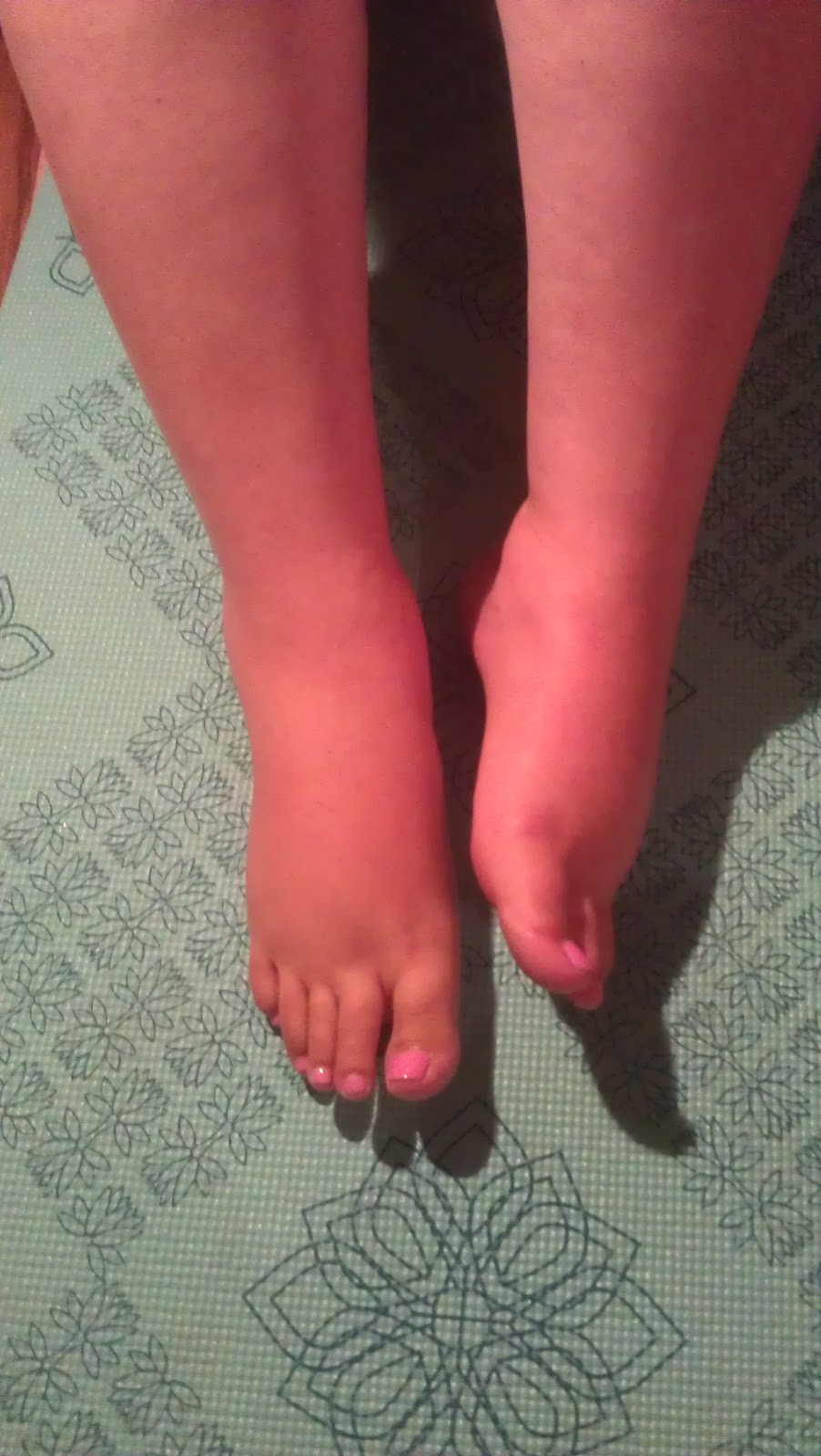
Swelling or edema of the lower extremities during
pregnancy is also a common complaint. This is a common occurrence and can be especially
bothersome at the end of the day and in the summer months. The lower extremity
swelling is usually due to an increase in your body’s fluid volume, weight
gain, as well as the baby’s pressure on the inferior vena cava (which is a
large artery that returns blood back to the heart). 3,4
To relieve
the swelling in the legs and feet, Dr. Igor Dukarevich advises avoidance of
prolonged sitting or standing, elevation on the lower extremities, frequent short
walks, use of well-fitting comfortable shoes, use of light support stocking, intake
of enough plain water, and limitation of caffeinated and salty food products. A
recent study also demonstrated improvement in swelling with regular foot and
leg massage. 3,4 We do provide
copies of this latest article for the father of your child in our office.
Edema of the lower extremities is usually a
temporary condition and resolves rapidly after birth. Swelling of the face,
neck, or upper extremities can a sign of a dangerous condition called pre-eclampsia
and you should certainly consult your obstetrician. 3,4
Many women also report skin and nail changes. There
is usually an increase in the rate of nail growth and a roughening of the nail
texture. The skin also becomes dryer and often cracks, necessitating regular
use of emollient lotions. 5
If you have any further questions on this topic, you
are welcome to leave them on our Facebook page, e-mail Dr. Igor Dukarevich
through our website at www.advpod.com, or call Advanced Podiatry Clinics at (708)
450-0705.
References:
1.
Ribeiro AP, Trombini-Souza F, de Camargo Neves Sacco I,
Ruano R, Zugaib M, João SM. Changes in the plantar pressure
distribution during gait throughout gestation. J Am
Podiatr Med Assoc. 2011 Sep-Oct;101(5):415-23.
2.
Bird AR, Menz HB, Hyde CC. The effect of pregnancy on footprint parameters. A prospective investigation.
J Am Podiatr Med Assoc. 1999 Aug;89(8):405-9.
3. Bamigboye AA, et al. Interventions for varicose veins and leg oedema in pregnancy.
Cochrane Database of Systematic Reviews. 2007:CD001066.
4.
Coban A, Sirin A. Effect of foot massage to decrease
physiological lower leg oedema
in late pregnancy: a randomized
controlled trial in Turkey. Int J Nurs Pract.
2010 Oct;16(5):454-60.
5.
Ponnapula P, Boberg JS. Lower
extremity changes experienced during pregnancy.
J Foot Ankle Surg. 2010 Sep-Oct;49(5):452-8.
Thursday, September 20, 2012

Friday, September 14, 2012
Dr. Claude Harb and Dr. Igor Dukarevich have signed up for the Prodigy 5K Run in Melrose Park, IL on the Veterans Day weekend (Saturday, November 10th, 2012). The run is one of the newest races in the Chicagoland area and we are excited to participate in it. The race will begin on theWinston Plaza, wind through the historic village neighborhoods and end at "Serpico Field." Come out to see your podiatry physicians run and cheer for us! We will be wearing blue and white Advanced Podiatry Clinics t-shirts and will be easy to spot.
Prodigy 2020 Foundation was created because many individuals lack an elements from what we believe are the basic life needs including, health, education, economics and social well-being, that are needed to fully participate in society. The goal of the Prodigy foundation is to help individuals achieve their personal and professional goals. We strongly support the foundation's values and are pround to participate in this event.

Prodigy 2020 Foundation was created because many individuals lack an elements from what we believe are the basic life needs including, health, education, economics and social well-being, that are needed to fully participate in society. The goal of the Prodigy foundation is to help individuals achieve their personal and professional goals. We strongly support the foundation's values and are pround to participate in this event.
Wednesday, September 12, 2012
Tuesday, September 4, 2012
Our first blog!
This is Advanced Podiatry Clinic's first blog!
We had a great time at the Taste of Melrose Park 2012 over the Labor Day weekend, despite the weather not cooperating! Advanced Podiatry Clinic was present at the fair with the James Medical Center tent. We performed diabetic foot screenings, provided education on
foot care and disease prevention, and answered lots of questions. We met a lot of great people and had a lot of delicious food. Check back for monthly updates on Advanced Podiatry Clinic's community service activities, foot health information, and updates on latest podiatric research. Thanks for reading.

Rainy morning at the fair

Dr. Claude Harb and Mayor Ronald Serpico of Melrose Park

Advanced Podiatry Clinic Tent

(From left to right) Dr. Dominika, Dr. Harb, Dr. Pla, Dr. Dukarevich

Providing information on foot health to the public

Bagpipe marching band
About Our Practice:
We are a friendly community podiatry clinic, specializing in surgical, biomechanical, and medical treatment of foot and ankle disorders. We strive to provide you and your family with superior, comprehensive, and affordable podiatric care in a comfortable setting. Our physicians and staff are always highly-trained, professional, and courteous. No complaint is too small or too big. When your feet hurt, you hurt - so make you appointment today!
Contact us:
Office: (708) 450-0705
Fax: (708) 345-0423
E-mail: advancedpod@gmail.com
Website: www.advpod.com
Our location:
Advanced Podiatry Clinics, Ltd.
James Medical Building
1835 N. 19th Ave., Suite 102
Melrose Park, IL 60160
We are conveniently located in the historical James Medical Building in the heart of Melrose Park, IL, on the corner of North Ave. and 19th Ave. We are across the street from Chase Bank and Tom's Steak House. Please click here for directions to our office.


Office Hours:
You can call us anytime for and appointment or with questions at (708) 450-0705. We accept same-day appointments and walk-ins, based on availability.
Monday: 10 am - 6 pm
Tuesday: by appointment only
Wednesday: 10 am - 6 pm
Thursday: by appointment only
Friday: 10 am - 3 pm
Saturday: by appointment only
Sunday: closed
We are a friendly community podiatry clinic, specializing in surgical, biomechanical, and medical treatment of foot and ankle disorders. We strive to provide you and your family with superior, comprehensive, and affordable podiatric care in a comfortable setting. Our physicians and staff are always highly-trained, professional, and courteous. No complaint is too small or too big. When your feet hurt, you hurt - so make you appointment today!
Contact us:
Office: (708) 450-0705
Fax: (708) 345-0423
E-mail: advancedpod@gmail.com
Website: www.advpod.com
Our location:
Advanced Podiatry Clinics, Ltd.
James Medical Building
1835 N. 19th Ave., Suite 102
Melrose Park, IL 60160
We are conveniently located in the historical James Medical Building in the heart of Melrose Park, IL, on the corner of North Ave. and 19th Ave. We are across the street from Chase Bank and Tom's Steak House. Please click here for directions to our office.
Office Hours:
You can call us anytime for and appointment or with questions at (708) 450-0705. We accept same-day appointments and walk-ins, based on availability.
Monday: 10 am - 6 pm
Tuesday: by appointment only
Wednesday: 10 am - 6 pm
Thursday: by appointment only
Friday: 10 am - 3 pm
Saturday: by appointment only
Sunday: closed
Subscribe to:
Posts (Atom)